Level 2 · Elementary · Story
卖香蕉的汤姆
Tom the banana seller
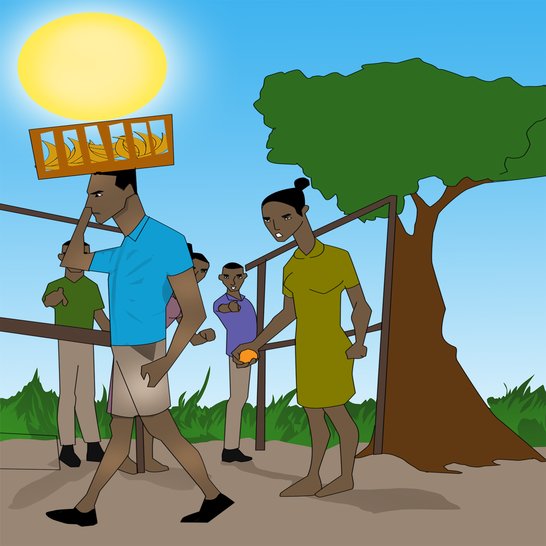
Tom carries a basket of ripe bananas to the market, but nobody wants to buy fruit from a man.
🔑 Key words in this story (24)
- 香蕉 xiāngjiāo banana
- 篮子 lánzi basket
- 把 bǎ a bunch (measure word); also puts the object before the verb
- 集市 jíshì market (in the open)
- 顶 dǐng to carry on one's head
- 女人 nǚrén woman
- 又 yòu 又…又 'both … and …'
- 数 shǔ to count
- 篮 lán basket (一篮 'a basketful')
- 熟透 shútòu fully ripe
- 更 gèng more (更喜欢 'like better, prefer')
- 人们 rénmen people
- 只有 zhǐyǒu only
- 男人 nánrén man
- 放弃 fàngqì to give up
- 叫卖 jiàomài to call out one's goods for sale
- 甜 tián sweet
- 妇女 fùnǚ woman
- 抓 zhuā to grab, to take hold of
- 仔细 zǐxì Careful and thorough, paying attention to every detail.
- 查看 chákàn to look at closely, to check
- 然后 ránhòu then, after that
- 越来越 yuèláiyuè more and more
- 摊位 tānwèi stall, stand
Tap any word for its meaning.
汤姆
Tom carries a basket of ripe bananas on his head.
汤姆
Tom goes to the market to sell bananas.
很
People at the market are buying fruit.
但是
But no one is buying Tom’s bananas. They prefer to buy fruit from women.
人们
“In our community, only women sell fruit,” people say. “What kind of a man is this?” people ask.
但是
But Tom does not give up. He calls, “Buy my bananas! Buy my big, sweet bananas!”
有
One woman picks up a bunch of bananas from the basket. She looks at the bananas carefully.
然后
The woman buys the bananas.
越来越
More people come to the stall. They buy Tom’s bananas and eat them.
不
Soon, the basket is empty. Tom counts the money he earned.
汤姆
Then Tom buys soap, sugar, and bread. He puts the things in his basket.
汤姆
Tom balances the basket on his head and goes home.