How to make idioms stick: what actually works (and what doesn't)
2026-07-31 · Idiomer
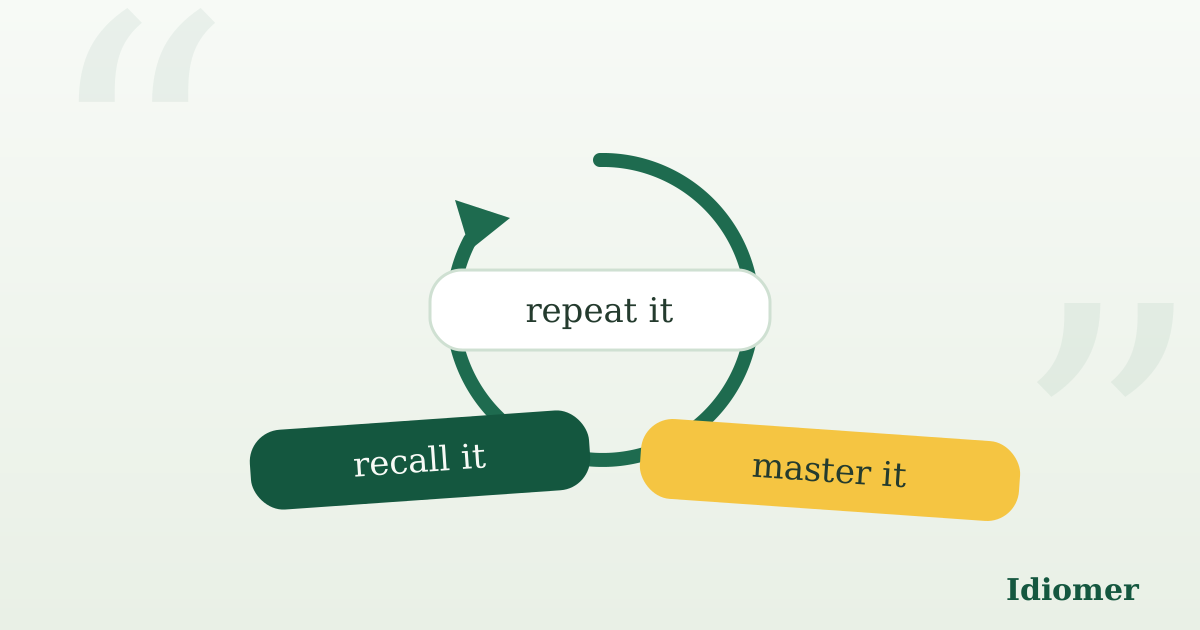
Here's the uncomfortable truth about idiom lists, including the ones on this site: reading a list once produces almost no long-term learning. What works is well-studied, and it's built into how Idiomer's practice system was designed.
What doesn't work
Re-reading. Highlighting. Nodding along thinking "yes, burn the midnight oil, got it." Recognition feels like knowledge, but recognizing an idiom on a list and recalling it in conversation are different skills stored differently.
What works
- Retrieval practice. Being asked — and having to produce the answer from memory — strengthens the memory far more than re-reading it. Every format in Idiomer practice is retrieval: guessing meaning from context, typing the missing phrase, rebuilding word order, transcribing audio.
- Context, not isolation. An idiom learned inside a real sentence carries its grammar, register and typical neighbors with it. That's why our drills quote real example sentences — including the exact surface form, so you learn "ragging on" and not just the dictionary's "rag on."
- Spacing and interleaving. Reviews spread over days beat cramming; mixed sets beat blocked ones. The drill's set system re-asks what you missed with increasing gaps, and mastery requires answering correctly twice in a row — not once, lucky.
- Error feedback that teaches. When you miss a word-order question, the drill shows which words are out of place, not just "wrong." When you give up on a cloze, you see the canonical spelling with full diacritics. Practice makes perfect — but only if the practice corrects you.
A realistic routine
Ten minutes daily beats seventy minutes on Sunday. Pick a 10-question set, drill to mastery, save the stubborn ones with the ☆ button, and check your rolling accuracy in the stats panel. When last-50 accuracy passes 80%, raise the set size. That's the whole method — the rest is showing up.
Want these phrases to stick? Drill them with endless practice questions →